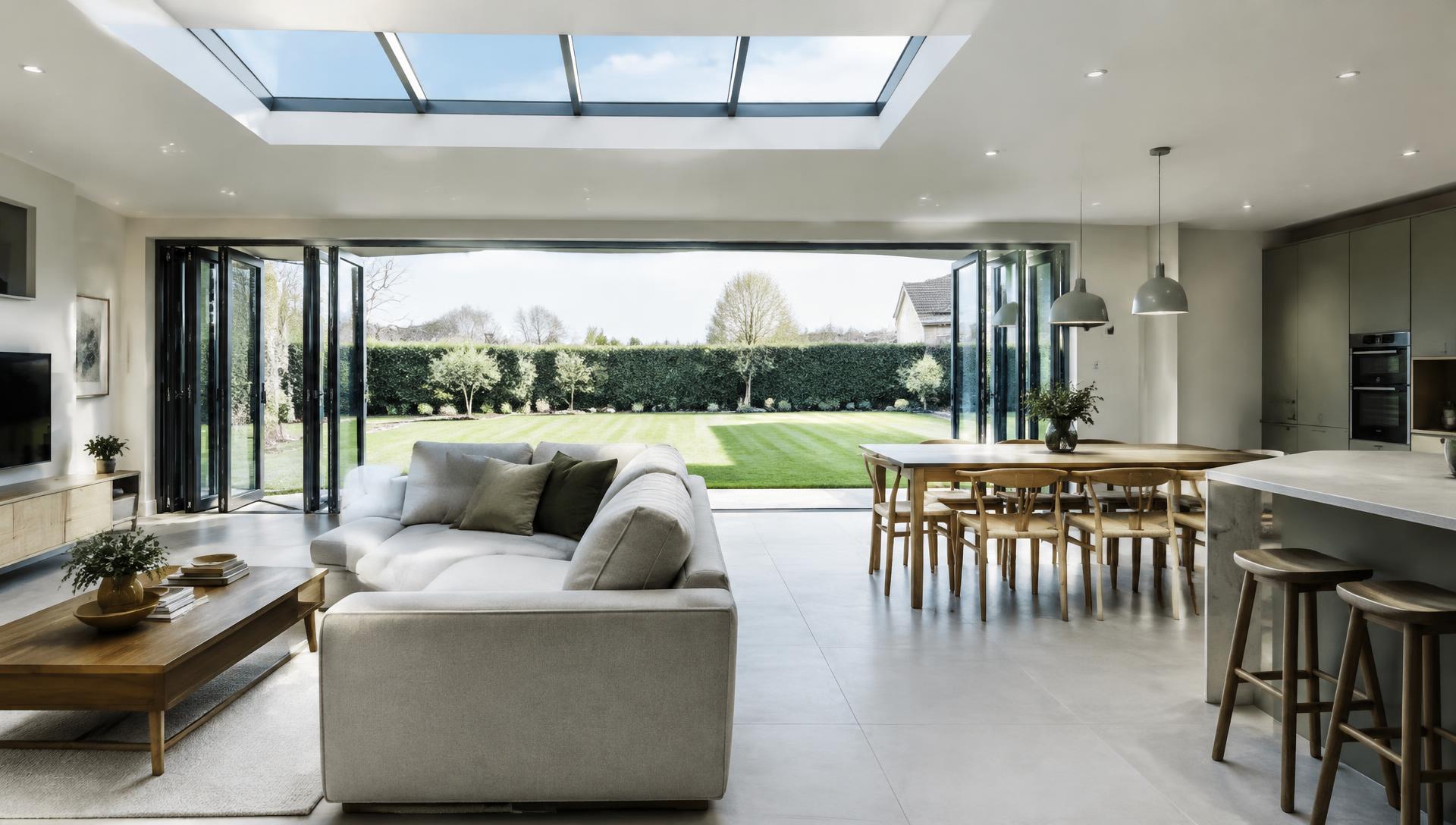
Glass extensions and rooflights
Window film for glass extensions, bi-folds and rooflights
The extension was built for the light and the garden. Clear solar film keeps both and takes the heat out of the afternoon.
A lot of glass, facing the sun.
Open-plan kitchen extensions with a wall of bi-folds or sliders, often with a rooflight or lantern above, can collect a remarkable amount of solar heat. By mid afternoon the kitchen is too hot, the glare is on every surface, and the blinds come down on the view the extension was built for.
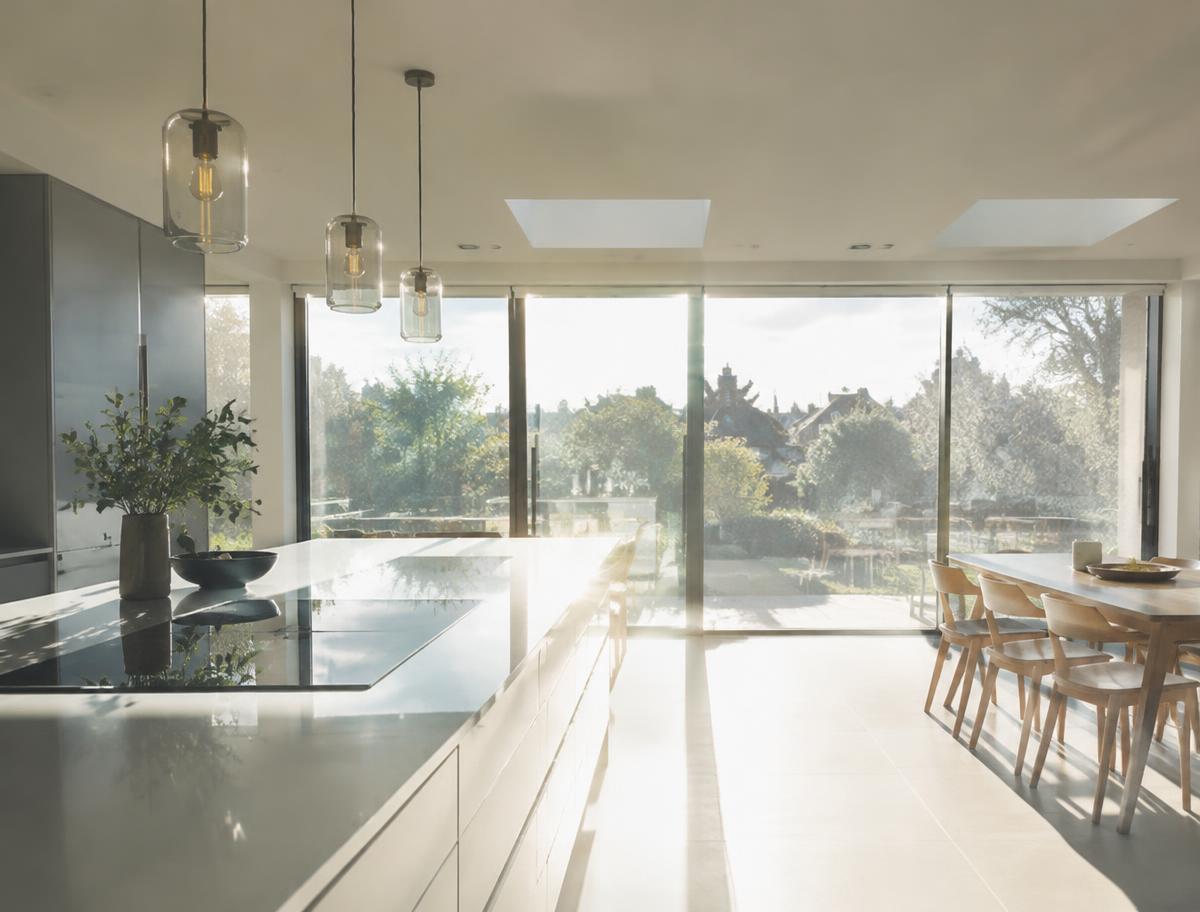
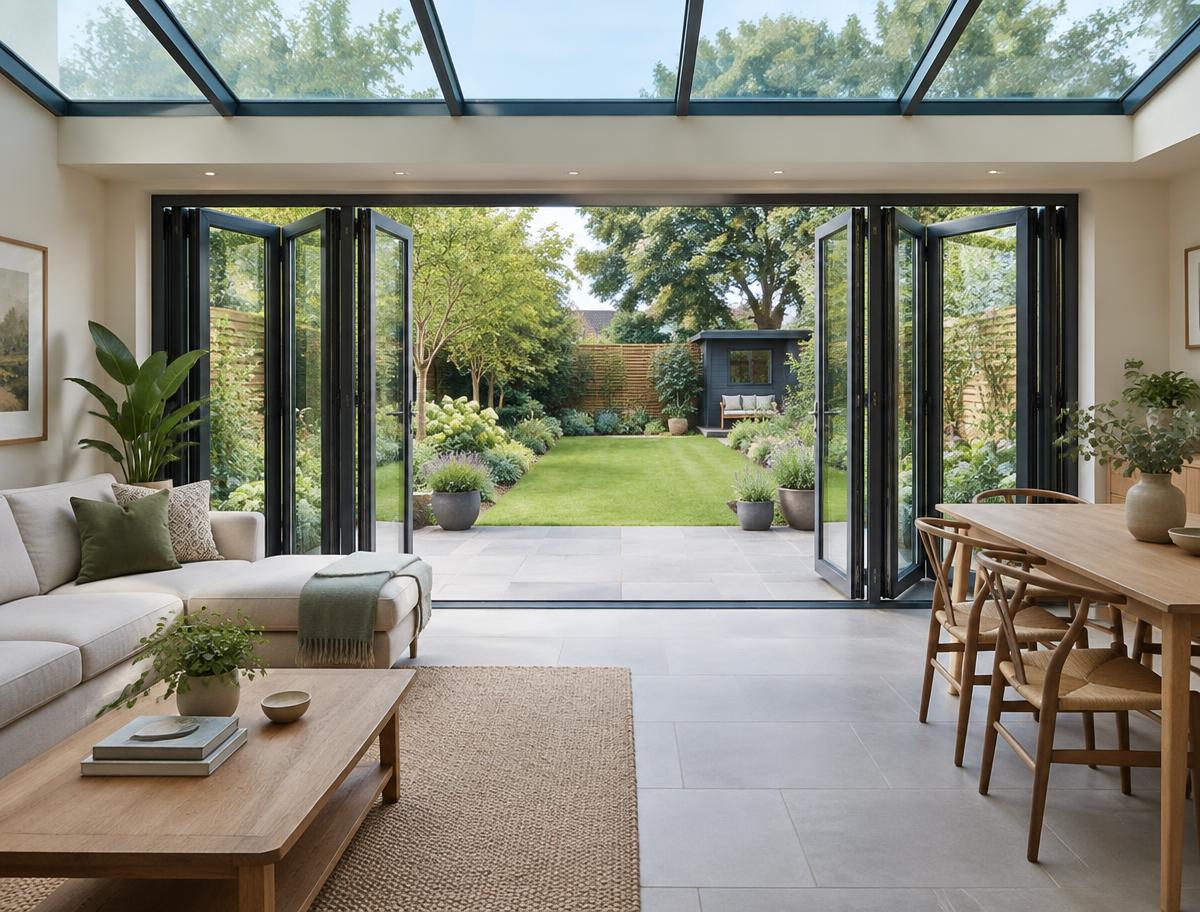
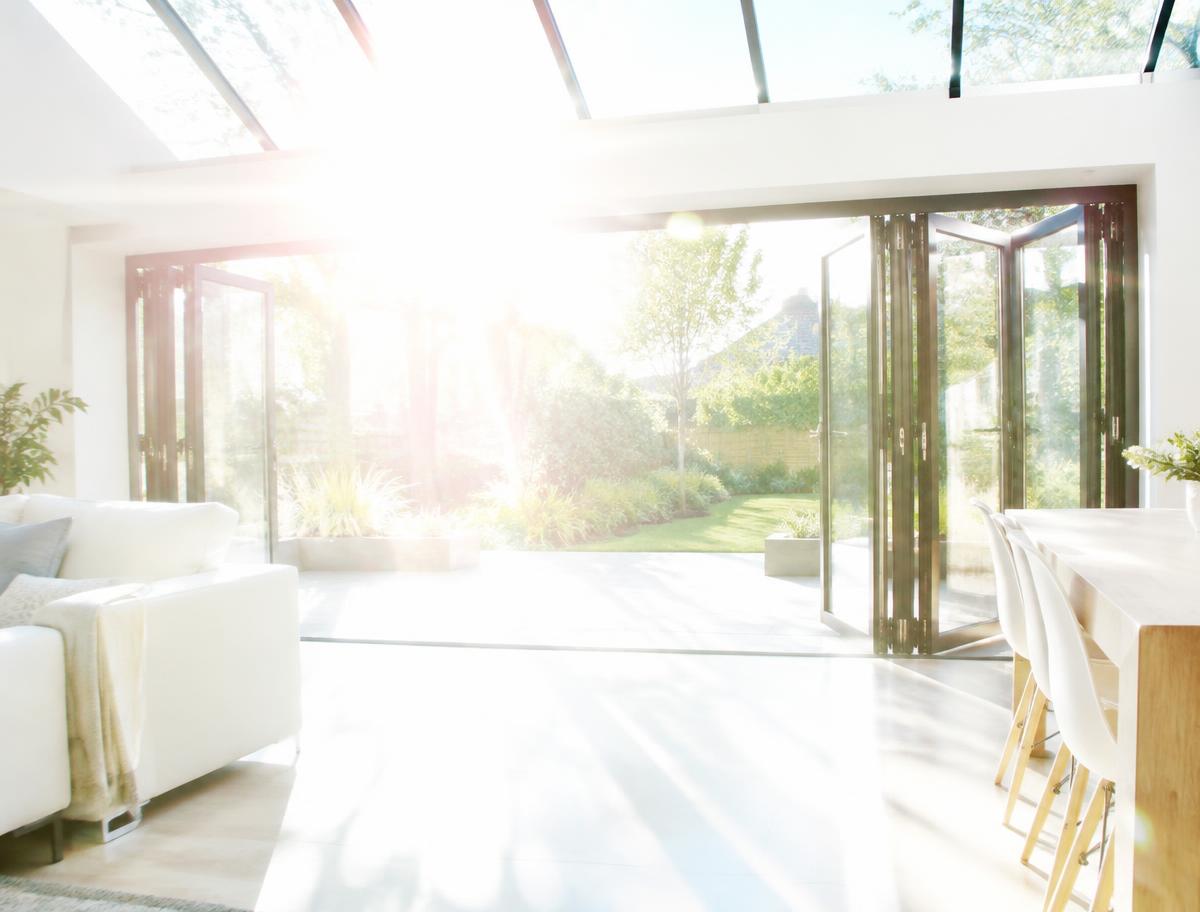
Illustration. Actual results depend on the film, the glass and which way it faces.
Bi-fold and sliding doors
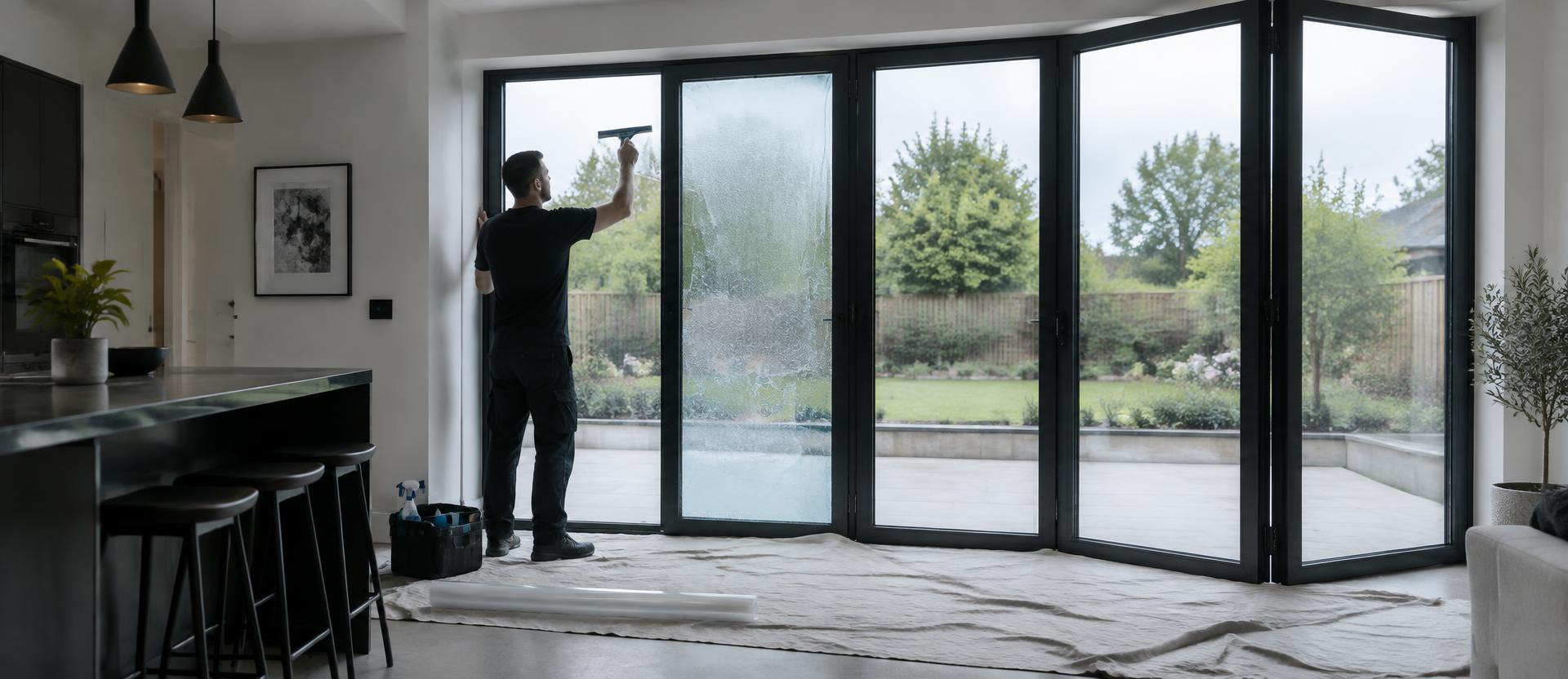
The biggest panes in the house, usually facing the garden and the sun. Clear solar film cuts heat and glare while staying almost invisible, and UV protection slows the fading of the floor by the doors. On ground-floor doors at the back of the house, a security film can do both jobs.
Rooflights, lanterns and glass roofs
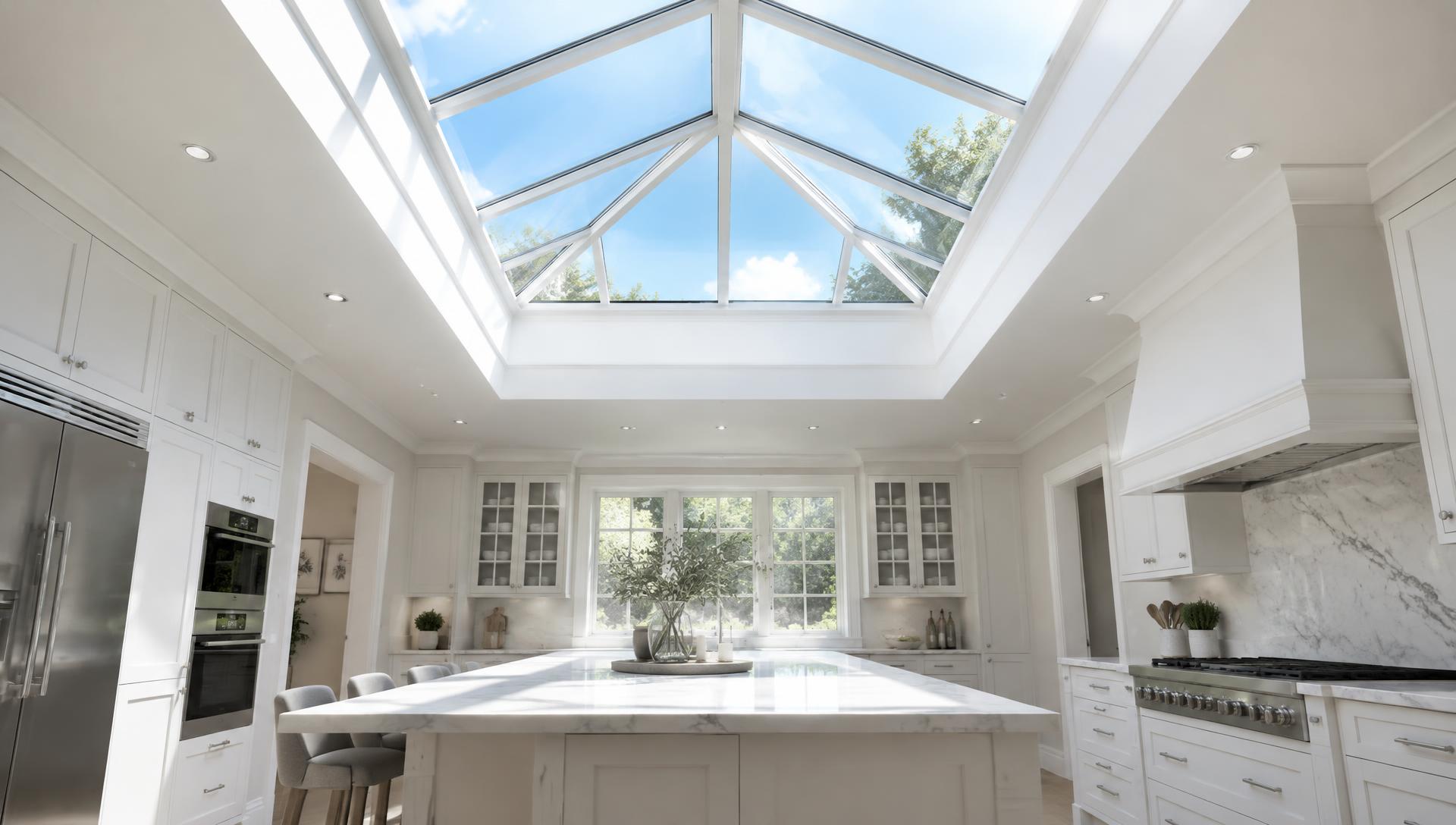
Overhead glass takes the sun at its highest and strongest, and a rooflight above a kitchen island can throw glare across every surface. Roof glass is usually laminated and may already have a coating, so the film needs choosing carefully. We plan safe access at the assessment, including towers for high rooflights.
Garden rooms and home offices
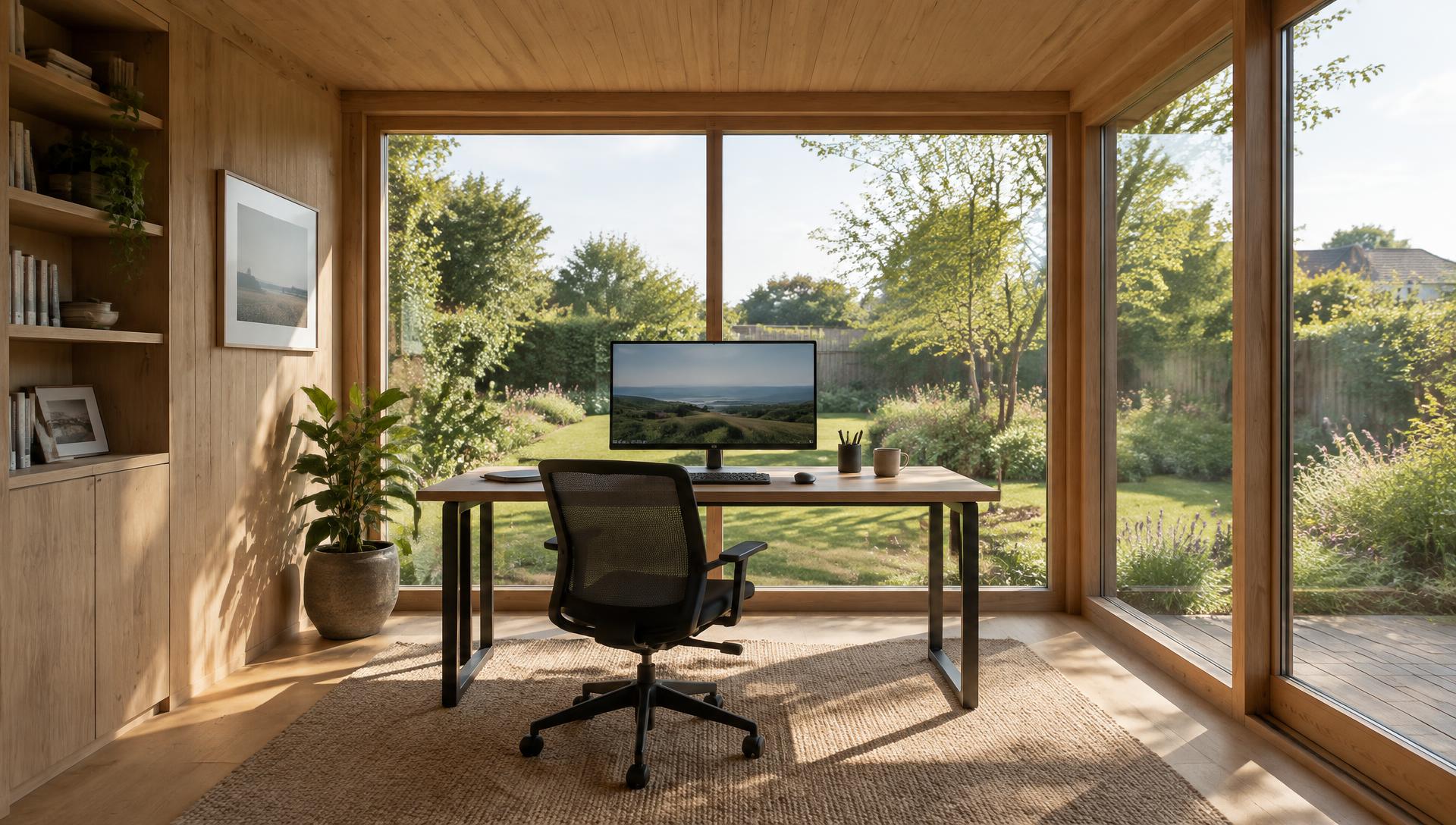
Large glass makes a small room feel open, until you need to read a screen. Solar film cuts glare and heat on the glass behind or beside the desk, and privacy film on an overlooked side stops people seeing in during calls.
The films that help
Solar control film
Clear films that cut heat and glare in glass extensions, conservatories and rooflights.
View film →02UV and anti-fade film
Helps protect floors, furniture and artwork from sun fading.
View film →03Privacy and frosted film
Frosted, etched and gradient finishes for bathrooms and overlooked rooms.
View film →05Safety and security film
Holds broken glass together and slows down forced entry.
View film →Before you decide
What we check
- The glazing system and the specification of the sealed units
- Any coatings already on the glass
- The size of the largest panes
- Which way the glass faces and what shades it
- Whether the rooflight needs a different film from the doors
Questions
Common questions.
Usually, yes. We check the glass specification and any guidance from the glazing manufacturer first.
We'll recommend films that look consistent across both, even if the rooflight needs a different film.
With clear solar films, yes. That's the point of using them.
Yes. Many only need the glass behind or beside the desk.